Protocol 30: Pi Network's Decisive Milestone Toward Mainnet Scalability
An Architectural Mutation at the Heart of the Network
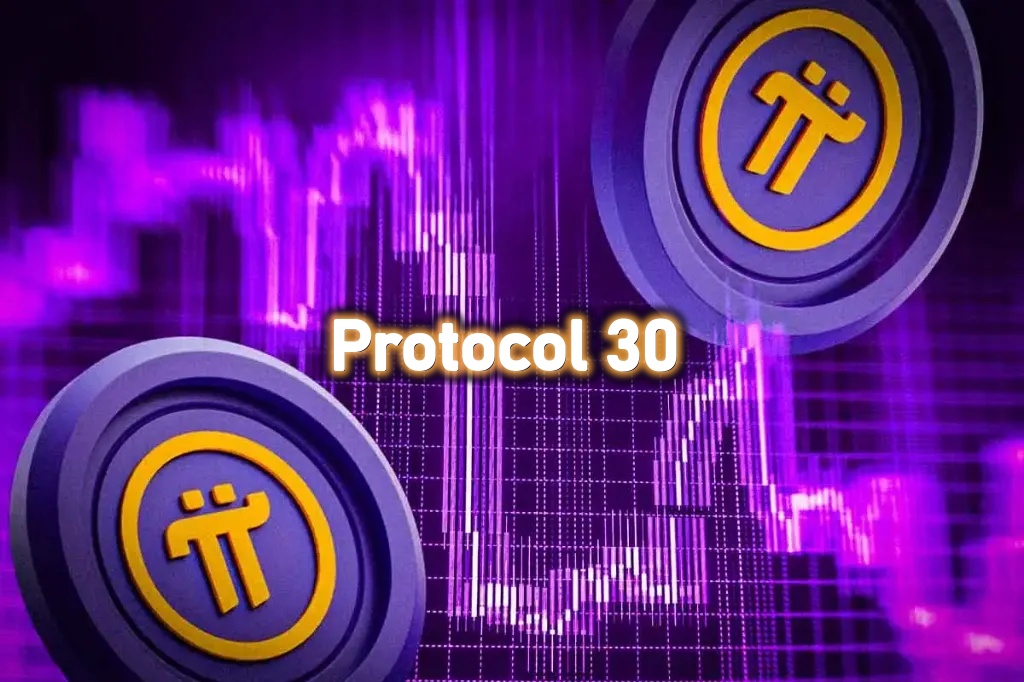
The Pi Network ecosystem is crossing a new threshold in its decentralized engineering. On Testnet 1, the transition to Protocol 30 via the API is now live. This major upgrade, which will be deployed sequentially on Testnet 2 and subsequently on the Mainnet, redefines the performance and security standards of the infrastructure.
In a peer-to-peer network of this magnitude, a protocol upgrade is akin to a concerted rewriting of the fundamental rules governing each validating node. Inspired by the foundations of the Stellar Consensus Protocol (SCP), Pi Network once again demonstrates its ability to evolve its technical architecture without compromising network stability or the security of Pioneers' balances.
What Does a Protocol Upgrade Mean for Validators?
For node operators—whether deploying their infrastructure via Docker Desktop or SoloHost configurations—a protocol upgrade implies rigorous synchronization. Each validator must update its software to remain in lockstep with the global consensus.
The protocol dictates the mathematical and cryptographic rules validating each block. When the ecosystem adopts a new edition of this "rulebook," the entire community aligns to ensure the integrity of the distributed ledger. This is the price of decentralization: a unanimous consensus, orchestrated by code and validated by peers.
A Phased Deployment Strategy: Scientific Rigor
Why adopt a phased approach? The question is worth asking at a time when impatience is creeping among certain observers of the Web3 economy. The development team favors a strict empirical methodology:
- Testnet 1: The initial laboratory where raw code is confronted with initial API request loads and node behaviors.
- Testnet 2: The intermediate environment allowing for the adjustment of interoperability and the simulation of conditions close to actual production.
- Mainnet: The final deployment, guaranteeing a robust, durable ecosystem immune to systemic flaws.
This graduated approach makes it possible to isolate anomalies upstream, thereby protecting the integrity of the network and the assets of millions of Pioneers spread across the globe.
The integration of technologies stemming from Stellar, such as Protocol 30 ("Bell"), positions Pi Network at the forefront of cryptographic innovation. By anticipating quantum threats and optimizing smart contract management, the network is not merely replicating the existing status quo: it is building the decentralized financial infrastructure of tomorrow, tailored for peer-to-peer commerce and the real economy.
Major Technical Contributions of Protocol 30 ("Bell")
On the underlying technology side, the integration of Stellar's advancements through Protocol 30 brings about considerable structural modifications:
- Multiplexed smart contract addresses (muxed addresses): A major breakthrough for businesses and dApps, enabling the management of multiple client financial flows using a single, unique smart contract.
- Signature verification and post-quantum resistance: The protocol incorporates cryptographic foundations designed to ward off future computing threats, guaranteeing the longevity of wallets and transactions.
- Millisecond ledger times: This optimization paves the way for ultra-fast transactional processing, essential for ecosystem barter and everyday micro-payments.
Why These Developments Matter to Pioneers
Beyond the technical complexity of lines of code and distributed ledgers, these developments have a direct impact on the real utility of Pi. A network endowed with more secure foundations attracts decentralized application developers, stimulates the Pi Browser economy, and strengthens the viability of commercial exchanges based on ecosystem barter value.
Building an international-scale network is not done in haste, but through the methodical placement of each cornerstone. With the successful transition from Testnet 1 to Protocol 30, Pi Network once again demonstrates the maturity of its infrastructure and its inexorable march toward complete Mainnet maturity.
Share this dispatch with your Pioneer circles
Pioneer Community Debate & Comments
Real-time Web3 discourse · Protected by Sentinelle Shield AI