
A Historic Trilateral Pivot: Trump, Xi, and Putin Forge a New Blueprint for Global Stability in Shenzhen

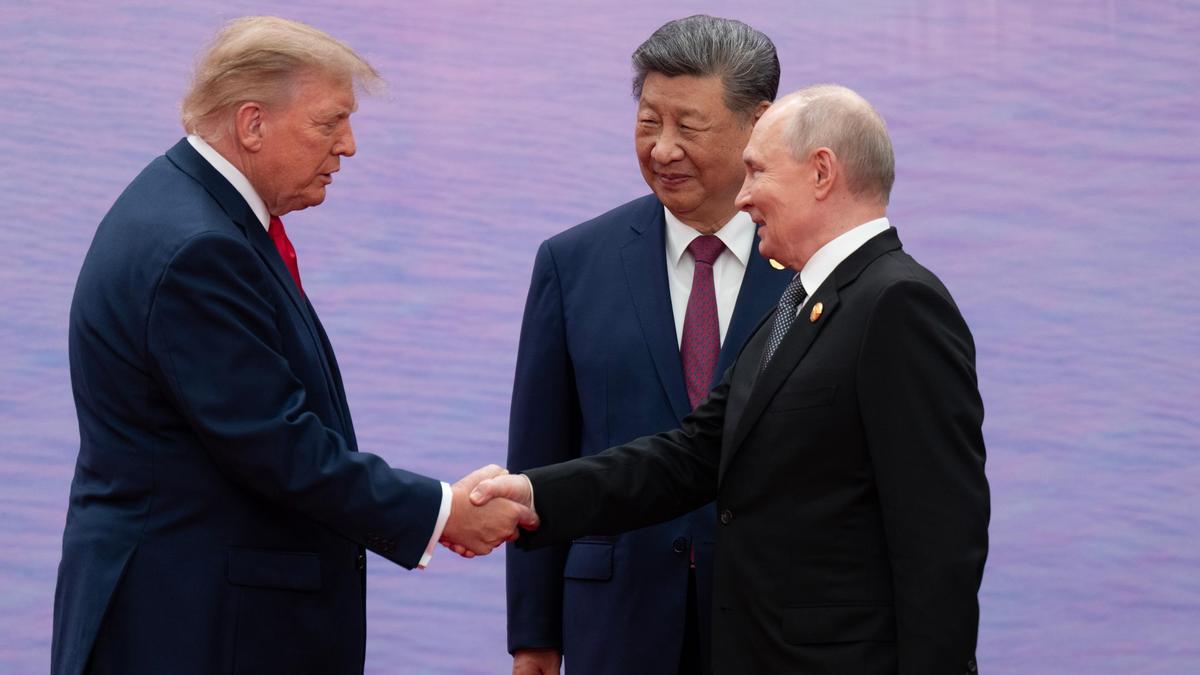
A Landmark Trilateral Encounter for International Stability
In a historic diplomatic event marking a critical juncture in modern international relations, President Donald Trump, Chinese President Xi Jinping, and Russian President Vladimir Putin convened in Shenzhen, China, for an unprecedented trilateral summit. According to reporting and interviews broadcast on Fox News, the primary objective of the high-level dialogue centers on strategic de-escalation, conflict prevention, and the pursuit of sustained global peace.
Speaking to journalists ahead of the formal proceedings, President Trump emphasized the necessity of direct engagement between the world's foremost powers. Highlighting nuclear arms control as a core focal point of the discussions, Trump indicated an openness to mutual inspection frameworks among the three nuclear-armed nations, underscoring that long-term peace requires transparent and verifiable commitments across all parties.
Nuclear Arms Control and Diplomatic Frameworks
The trilateral talks represent a significant structural shift in contemporary diplomacy, bringing together Washington, Beijing, and Moscow around a shared negotiating table. Observers note that while strategic and ideological differences remain pronounced, the willingness of the three leaders to prioritize arms control reflects an urgent awareness of the risks posed by unconstrained technological and military competition.
Official statements and diplomatic readouts indicate that discussions focused on establishing continuous communication channels to prevent accidental escalation, addressing regional security flashpoints, and exploring balanced diplomatic compromises aimed at safeguarding civilian populations and international sovereignty.
The intersection of geopolitical de-escalation and global digital infrastructure cannot be overstated. When major superpowers establish predictable channels for communication, the resulting macroeconomic stability directly empowers decentralized protocols, cross-border digital payment solutions, and open networks to scale without systemic regulatory fragmentation.
Macroeconomic Stability and Market Implications
For international financial institutions, cross-border commerce, and the broader digital economy, progress toward geopolitical de-escalation offers critical macroeconomic relief. Extended geopolitical friction historically dampens capital investment, fragments supply chains, and triggers currency volatility. A credible commitment to trilateral dialogue yields several key economic benefits:
- Trade Route Normalization: De-escalating tensions along vital maritime and air corridors reduces global logistics bottlenecks and dampens inflationary pressures.
- Financial Confidence: Institutional markets and energy exchanges tend to stabilize when the risk of systemic military conflict between leading powers recedes.
- Decentralized Infrastructure Growth: An era of calculated peaceful coexistence allows Web3 ecosystems, decentralized protocols, and digital payment networks like Pi Network to expand utilities and cross-border integrations without facing sudden regulatory or territorial fragmentation.

The Road Ahead: Building Enduring Peace
While diplomatic analysts caution that resolving decades of strategic rivalry will require sustained negotiation, the convening of the Shenzhen trilateral summit signals a consequential step toward diplomatic pragmatism. PiCoinMagazine will continue monitoring developments at the crossroads of international diplomacy, monetary stability, and global technological infrastructure.
Share this dispatch with your Pioneer circles
Pioneer Community Debate & Comments
Real-time Web3 discourse · Protected by Sentinelle Shield AI